
Short answer: SIEM (Security Information and Event Management) is software that collects log and event data from across an IT environment, normalizes it, correlates events in real time, and raises alerts on suspicious activity. It gives security teams centralized visibility for threat detection, incident response, and compliance reporting.
What is SIEM?
SIEM stands for Security Information and Event Management. It is a platform that unifies two older technologies: Security Information Management (SIM), which handled log storage and reporting, and Security Event Management (SEM), which handled real-time monitoring and alerting. A modern SIEM aggregates data from firewalls, servers, endpoints, cloud services, applications, and network devices into one place, then analyses that data to detect threats that individual tools would miss on their own.
Think of a SIEM as the central nervous system of a Security Operations Center (SOC). Every device on a network generates logs, but a single log line rarely tells the full story. A SIEM connects the dots. A failed login on one server plus a successful login from a foreign IP plus a large data transfer, when correlated, become a clear attack pattern rather than three isolated events.
How SIEM Works: The Data Pipeline
A SIEM follows a repeatable pipeline that turns raw, noisy logs into actionable security alerts. Understanding each stage is essential for anyone learning security operations.
1. Log and Event Collection
The SIEM ingests data from hundreds or thousands of sources using agents, syslog, APIs, and connectors. Sources include operating systems (Windows Event Logs, Linux syslog), firewalls, IDS/IPS, endpoint detection tools, Active Directory, VPNs, web servers, databases, and cloud platforms such as AWS, Azure, and Google Cloud.
2. Normalization and Parsing
Every vendor formats logs differently. Normalization converts these varied formats into a common schema so that a "source IP" from a Cisco firewall and a "src_ip" from a Palo Alto device are understood as the same field. This step makes cross-source correlation possible.
3. Enrichment
The SIEM adds context to events, such as geolocation of IP addresses, threat intelligence reputation scores, asset criticality, and user identity from directory services. Enriched data helps analysts prioritise what matters.
4. Correlation and Analytics
This is the core value of a SIEM. Correlation rules and, increasingly, machine learning and User and Entity Behaviour Analytics (UEBA) link related events across time and sources to spot attack patterns, anomalies, and known indicators of compromise.
5. Alerting and Dashboards
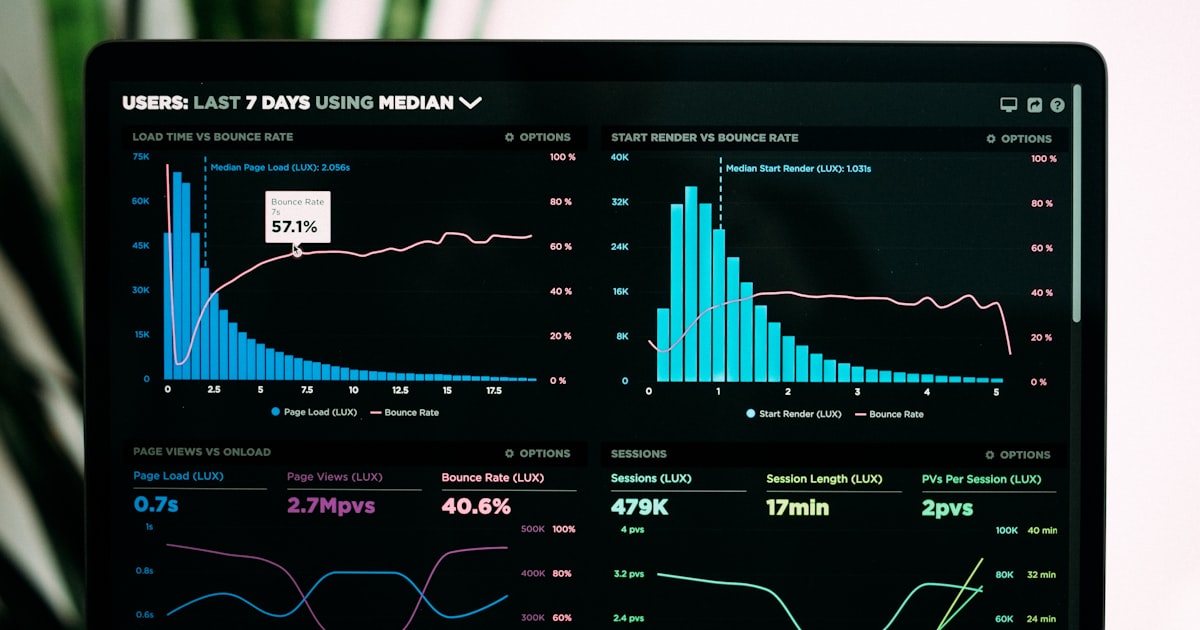
When a rule fires or an anomaly is detected, the SIEM generates a prioritised alert and displays it on dashboards. Analysts triage these alerts, investigate, and escalate genuine incidents. Dashboards also provide real-time visibility into the overall security posture.
6. Reporting and Retention
SIEMs store logs for months or years to support forensic investigation and compliance audits, and they generate scheduled reports for standards such as PCI DSS, ISO 27001, HIPAA, and GDPR.
SIEM vs SOAR vs Log Management
These three terms are often confused. They are related but serve different purposes, as the table below shows.
| Aspect | Log Management | SIEM | SOAR |
|---|---|---|---|
| Primary goal | Store and search logs | Detect threats via correlation | Automate and orchestrate response |
| Analysis | Basic search, reporting | Real-time correlation, alerting, UEBA | Playbook-driven automated actions |
| Output | Searchable log archive | Prioritised security alerts | Automated remediation, case management |
| Example use | Compliance log retention | Detecting a brute-force attack | Auto-isolating an infected host |
| Relationship | Feeds the SIEM | Feeds SOAR alerts | Acts on SIEM output |
In short: log management is the foundation, SIEM adds intelligence to detect threats, and SOAR (Security Orchestration, Automation and Response) sits on top to automate the response. Many modern platforms now bundle all three.
Key SIEM Use Cases
- Threat detection: Spotting brute-force attacks, malware beaconing, lateral movement, privilege escalation, and data exfiltration in real time.
- Incident response: Providing the timeline, evidence, and context analysts need to investigate and contain breaches quickly.
- Compliance: Automated log retention and reporting for PCI DSS, ISO 27001, HIPAA, SOX, GDPR, and India's DPDP Act requirements.
- Insider threat detection: Using behaviour analytics to flag employees or compromised accounts acting abnormally.
- Continuous monitoring: 24x7 visibility across on-premises, cloud, and hybrid environments.
Key Features to Look For
- Broad log source support and easy integrations
- Real-time correlation and customisable detection rules
- UEBA and machine-learning-based anomaly detection
- Threat intelligence feed integration
- Scalable storage and fast search across large datasets
- Compliance reporting templates
- SOAR or automation capabilities for faster response
- Cloud-native or hybrid deployment options
SIEM Deployment Models
Organisations can deploy SIEM in several ways depending on budget, skills, and scale:
- On-premises: Full control and data residency, but high hardware and maintenance cost. Common for banks and government.
- Cloud / SaaS: Vendor-hosted, elastic, and lower upfront cost. Examples include Microsoft Sentinel and cloud editions of Splunk.
- Hybrid: A mix that keeps sensitive logs on-premises while using the cloud for scale.
- Managed (MSSP / co-managed): A managed security service provider runs the SIEM and SOC on your behalf, ideal for small and mid-sized firms without an in-house team.
A Real-World SIEM Example: Detecting a Brute-Force Attack
To see why correlation matters, imagine an attacker trying to break into a company's VPN. Individually, the logs look harmless. But a SIEM correlation rule ties them together into a single, high-priority incident. Here is how the events unfold:
- The VPN gateway logs 200 failed login attempts for one user account within two minutes.
- The SIEM enriches the source IP and finds it is from a country where the company has no staff, flagged as suspicious by a threat intelligence feed.
- Active Directory then logs a successful login for that same account.
- Minutes later, a file server logs an unusually large data transfer from that user's session.
A correlation rule such as "many failed logins, followed by a success from a suspicious IP, followed by abnormal data movement" fires a single high-severity alert. The SOC analyst sees the full chain on the dashboard instead of hunting through four separate systems, and can respond in minutes rather than hours. This is the core reason organisations invest in SIEM.
Common SIEM Challenges
SIEM is powerful but not plug-and-play. Teams that deploy one should be aware of these common challenges:
- Alert fatigue: Poorly tuned rules generate thousands of false positives, burying real threats. Continuous tuning is essential.
- Cost of data ingestion: Many SIEMs charge by data volume, so ingesting everything can become very expensive. Teams must decide which logs truly add value.
- Skills gap: A SIEM is only as good as the analysts and engineers who tune and operate it. Skilled staff are in short supply.
- Log source coverage: Blind spots appear when important systems are not sending logs, so onboarding sources correctly is critical.
- Storage and retention: Balancing compliance-driven retention with storage cost requires planning.
How SIEM Fits with EDR, SOAR and Threat Intel
A SIEM does not work alone. In a mature security stack it sits at the centre, consuming and enriching data from other tools. Endpoint Detection and Response (EDR) or Extended Detection and Response (XDR) feed rich endpoint telemetry into the SIEM, threat intelligence platforms supply context on known attackers, and SOAR acts on the SIEM's alerts to automate containment. Together these tools shorten two key metrics every security team cares about: Mean Time to Detect (MTTD) and Mean Time to Respond (MTTR). Learning how these pieces interlock is exactly what separates a confident SOC analyst from someone who only knows one screen.
SIEM Skills and Careers in India
SIEM expertise is one of the most in-demand cyber security skills. Most SOC roles require hands-on knowledge of at least one SIEM platform. In India, a SOC Analyst earns roughly ₹3–6 LPA at entry level, rising to ₹8–15 LPA for L2/L3 analysts and threat hunters with three to five years of experience. Learning open-source SIEMs such as Wazuh and the ELK Stack is the most cost-effective way to build these skills before working on commercial tools like Splunk or QRadar.
At Cyber Defence (Hisar, Haryana), an ISO-certified and GeM-registered cyber security training institute founded by Amit Kumar (CEH, CRTA), the cyber security course at ₹15,000 (3–4 months) covers security fundamentals including logging and monitoring concepts, while the ethical hacking / CEH-aligned course at ₹60,000 (6 months) goes deeper into offensive and defensive security. Both help learners build toward SOC and SIEM roles. Explore all programmes on our courses page or the cyber security training in Hisar page.
New to the field? Start with our guides on what is cyber security and the cyber security roadmap for 2026, then prepare with cyber security interview questions.
FAQ
What is SIEM in simple terms?
SIEM is security software that collects logs from all your systems, connects related events, and alerts your team when something looks like an attack, giving one central view of your security.
What does a SIEM do?
A SIEM collects and normalizes log data, correlates events in real time, enriches them with threat intelligence, raises prioritised alerts, and stores logs for investigation and compliance reporting.
Is SIEM the same as SOC?
No. A SIEM is a tool, while a SOC (Security Operations Center) is a team of people and processes that use the SIEM, along with EDR and SOAR, to monitor and respond to threats.
What is the difference between SIEM and SOAR?
SIEM focuses on detecting threats by correlating log data, while SOAR focuses on automating and orchestrating the response to those threats using playbooks. They complement each other.
Which SIEM tool should a beginner learn first?
Beginners should start with free, open-source SIEMs such as Wazuh or the ELK Stack to learn the fundamentals, then move to commercial tools like Splunk or Microsoft Sentinel that employers use.
Do I need SIEM knowledge to become a SOC analyst?
Yes. SIEM skills are essential for almost every SOC analyst role, since triaging and investigating alerts in a SIEM is a core part of the daily job.
Ready to build SOC and SIEM skills? Talk to Cyber Defence, Hisar about our cyber security and ethical hacking courses. Call or WhatsApp +91-75175-72000 today.